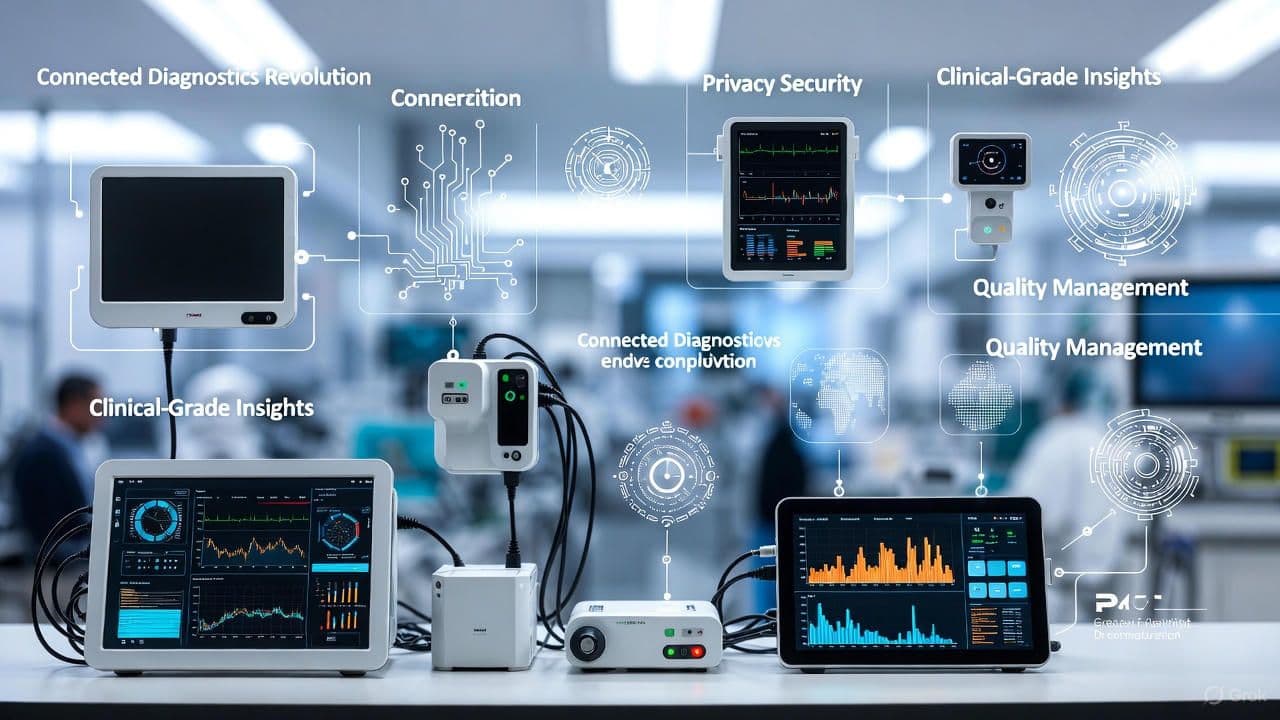
Remote Patient Monitoring in 2025: Predictions and Pitfalls
Look ahead at the RPM landscape of 2025. Explore emerging technologies, regulatory changes, market trends, and potential challenges that will shape the next phase of remote patient monitoring.
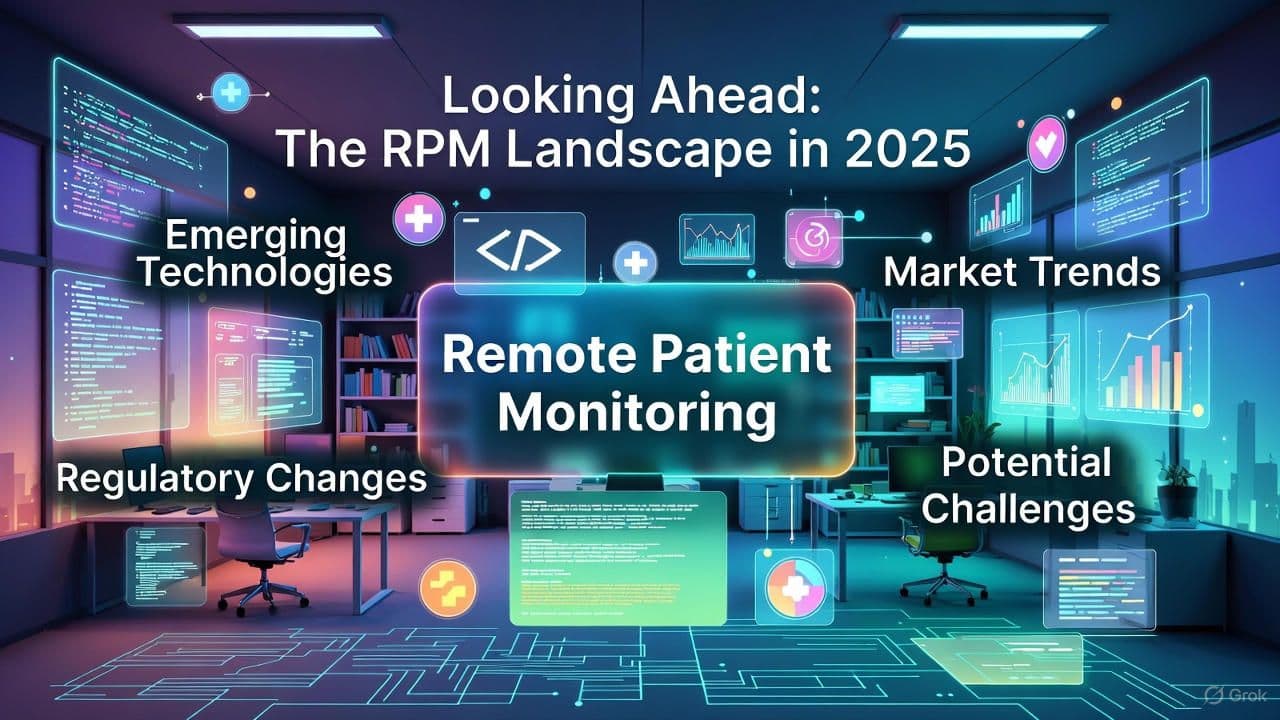
The Remote Patient Monitoring (RPM) landscape of 2025 is defined by a single, overarching theme: invisibility. We are moving away from the era of "gadgets and gears"—where patients had to actively engage with cumbersome hardware—toward an era of ambient, autonomous, and predictive care.
Here is a forecast of the technologies, regulations, and market forces shaping this next phase.
1. The Technology Shift: "The Great Disappearing Act"
For the last decade, RPM relied on active patient participation: "Please put on this cuff," "Please step on this scale." In 2025, the burden of data collection is shifting from the patient to the environment.
- Ambient Sensing & Radar: The most exciting frontier is "contactless" monitoring. Utilizing Wi-Fi sensing and radar technology, devices can now detect a patient’s respiration rate, sleep quality, and even fall events without them ever wearing a device. These systems analyze how radio waves bounce off the human body, turning the bedroom itself into a diagnostic tool.
- On-Device AI (Edge Computing): We are seeing the death of the "dumb" sensor. New wearables processed in 2025 don't just stream raw data; they run ML models locally on the chip. A heart patch will soon be able to distinguish between a "jogging" heart rate and an "arrhythmia" heart rate before sending a single byte of data to the cloud, drastically reducing false alarms.
2. Regulatory & Reimbursement: The Value-Based Pivot
The Centers for Medicare & Medicaid Services (CMS) is slowly but surely steering the ship away from simple fee-for-service (paying for each reading) toward value-based outcomes.
- The FQHC/RHC Breakthrough: One of the most significant regulatory shifts in the 2025 landscape is the leveling of the playing field for Federally Qualified Health Centers (FQHCs) and Rural Health Clinics (RHCs). New billing structures allow these safety-net providers to bill for RPM with parity to private practices, unlocking remote care for millions of underserved patients in rural America.
- Audit Scrutiny: As RPM spending balloons, the Office of Inspector General (OIG) is tightening its grip. In 2025, "auto-shipping" devices to patients who haven't seen a doctor is a major compliance red flag. The focus is now on "Therapeutic Utility"—providers must prove they are actually using the data to change treatment plans, not just collecting it for revenue.
3. Market Trends: Consolidation and Specialization
The "Wild West" of thousands of RPM startups is ending. We are entering a phase of rapid consolidation.
- Platform Fatigue: Hospital CIOs are done buying one app for diabetes, another for heart failure, and a third for maternity. The market is favoring "condition-agnostic" platforms—single infrastructure layers that can ingest data from a glucometer, a spirometer, and a weight scale simultaneously.
- "Hospital-at-Home" as Standard of Care: What began as a pilot program is becoming a permanent department. Health systems are no longer asking if they should build a virtual ward, but how big it should be. The acuity level is rising; we are now seeing chemotherapy and complex wound care being managed remotely, pushed by payer incentives to lower bed-day costs.
4. The Challenge: The "Human in the Loop" Bottleneck
Despite the AI advancements, the biggest constraint in 2025 remains the workforce.
- The Nurse Shortage: Technology cannot fix a lack of nurses. If an RPM program generates 500 alerts a day, and there are only two nurses to review them, the program fails. The challenge for 2025 is not generating data, but automating triage.
- Cybersecurity Threats: As we connect more devices—pacemakers, insulin pumps, infusion drivers—the attack surface expands. Hospitals are facing a new reality where "ransomware" doesn't just lock files; it could theoretically lock medical devices. Security architecture is no longer an IT problem; it is a patient safety problem.
Summary: The Road Ahead
The RPM of 2025 is less about "monitoring" and more about "managing." It is quieter, smarter, and deeply integrated into the fabric of daily life. Success in this new landscape won't be measured by how much data we can collect, but by how much we can ignore—filtering out the noise to focus purely on the signal that saves a life.