Navigating CE Certification for App-Connected Medical Devices
Step-by-step guide to achieving CE marking for medical devices with app connectivity. Understand MDR requirements, documentation needs, testing protocols, and common certification pitfalls.

Achieving CE marking for a connected medical device under the EU Medical Device Regulation (MDR 2017/745) is a rigorous process, primarily because "connectivity" introduces new layers of scrutiny regarding cybersecurity, data privacy, and software lifecycle management.
Here is your step-by-step guide to navigating this journey, specifically tailored for devices with app connectivity.
Phase 1: Classification & Regulatory Strategy
The most critical error happens here. Under the old MDD, many apps were Class I. Under MDR, Rule 11 has up-classified almost everything connected to Class IIa or higher.
- Apply MDR Rule 11:
- Class IIa: If your software provides information used to make decisions for diagnosis or therapeutic purposes (e.g., a blood pressure app that categorizes readings as "Hypertensive").
- Class IIb: If a wrong decision based on that info could lead to serious health deterioration (e.g., an insulin calculator or arrhythmia detector).
- Class I: Only if the app purely stores/displays data without interpretation (e.g., a raw log of weight). Most connected apps will fail to stay in Class I.
- Determine "SaMD" vs. "SiMD":
- SaMD (Software as a Medical Device): The app is the device (e.g., a depression therapy chatbot).
- SiMD (Software in a Medical Device): The app drives a hardware device (e.g., an app that controls a TENS machine).
- Note: If the app drives the hardware, it generally takes the same classification as the hardware.
Phase 2: The "Connected" Quality Management System (QMS)
You cannot just build the app; you must build the process that built the app.
- Implement ISO 13485: This is non-negotiable. Your QMS must cover design control, risk management, and supplier management (including cloud providers like AWS/Azure).
- Adopt IEC 62304 (Software Lifecycle):
- Classify your software safety class (A, B, or C).
- Key Requirement: You must demonstrate segregation. If your "Medical AI" runs on the same app as a "User Profile" feature, can you prove a crash in the profile won't kill the AI? If not, the whole app is Class C (highest scrutiny).
Phase 3: Cybersecurity & Risk Management (The "App" Layer)
Connectivity triggers a specific set of requirements that purely hardware devices avoid.
- ISO 14971 (Risk Management): You must assess risks not just to the patient, but to the data. What happens if Bluetooth disconnects during a firmware update? What if the cloud server is down?
- MDCG 2019-16 (Cybersecurity): This is the bible for connected devices in the EU.
- Penetration Testing: You must conduct third-party pen-tests on your app and API endpoints.
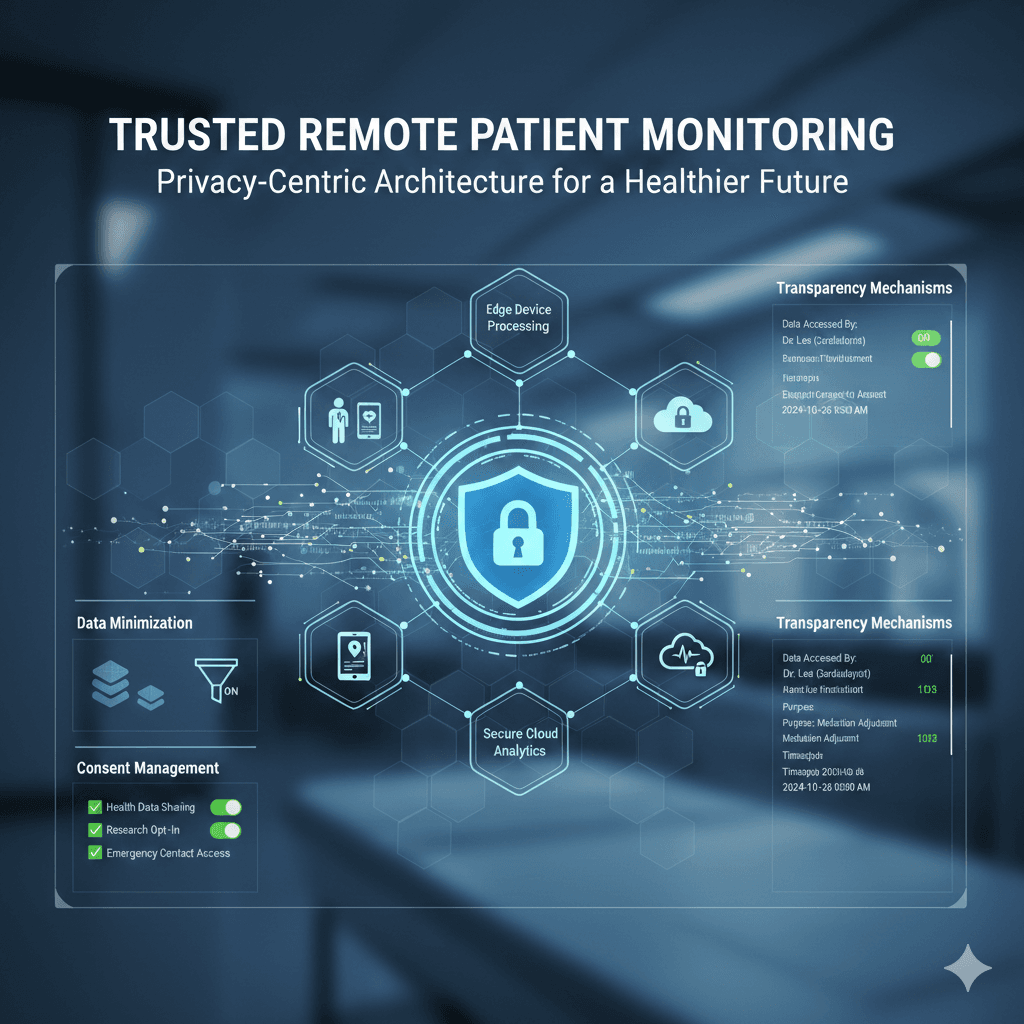
- GDPR Compliance: Since you handle health data, your "Privacy by Design" documentation will be audited alongside your clinical safety data.
- Radio Equipment Directive (RED): Since your device has Bluetooth/Wi-Fi, you must also comply with RED (2014/53/EU). This is separate from MDR but required for the CE mark. You will need EMC testing (IEC 60601-1-2) specifically for radio-equipped devices.
Phase 4: Clinical Evaluation (CER)
For apps, "Clinical Evaluation" is often where startups get stuck. You cannot just say "it works"; you must prove "it helps."
- Literature Search: Prove that the underlying medical algorithm is scientifically valid (e.g., "Framingham Risk Score is a proven predictor of cardiac risk").
- Clinical Investigation (if needed): If your app uses a novel algorithm (e.g., "Our AI predicts flu from voice samples"), literature isn't enough. You will need a prospective clinical trial to prove valid clinical association.
- Usability Engineering (IEC 62366): You must prove that a layperson (e.g., an elderly patient) can pair the device and read the app without making a critical error.
Phase 5: The Technical File & Submission
Your Technical File is the "box of evidence" you hand to the Notified Body. For connected devices, ensure it includes:
- Software Architecture: Detailed diagrams showing the App, Cloud, Firmware, and API interactions.
- SOUP List (Software of Unknown Provenance): A list of every third-party library (e.g., React Native, Bluetooth stack) and a risk assessment for each.
- Labeling: Your "Instructions for Use" (IFU) can be digital (e-IFU) for certain devices, but you must strictly follow Regulation (EU) 207/2012.
Phase 6: Certification & Post-Market
- Select a Notified Body: Choose one with specific "MDS 1005" (Active Devices) and "MDS 1002" (Software) designation codes.
- EUDAMED Registration: You must register your device and your company (SRN - Single Registration Number).
- Post-Market Surveillance (PMS): You need a plan to collect real-world data. For apps, this is easier—you can build automated analytics to track usage patterns and error logs (e.g., "Connection drop rate is 2%").