How Bluetooth SIG Standards Are Shaping the Future of Health Devices
Dive deep into the latest Bluetooth SIG specifications and learn how they are revolutionizing medical device connectivity, ensuring interoperability, and enabling the next generation of connected healthcare.
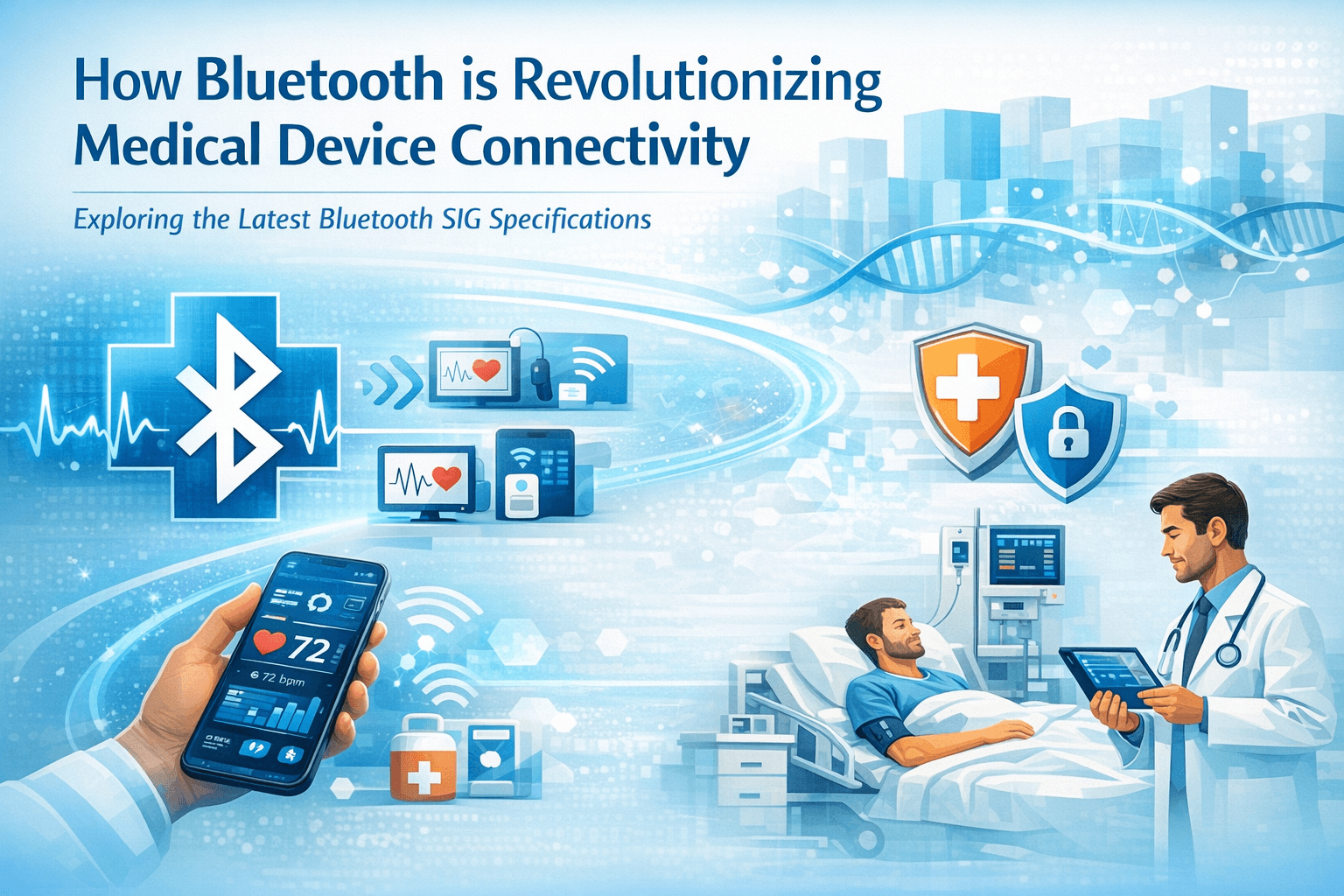
1. The Game Changer: Generic Health Sensor Profile (GHSP)
Historically, Bluetooth SIG released specific profiles for specific devices: the Heart Rate Profile (HRP), the Glucose Profile (GLP), or the Blood Pressure Profile (BLP). While effective, this approach was slow. If you invented a new type of sensor, you had to wait for a new profile to be standardized
Enter the <strong>Generic Health Sensor Profile (GHSP)</strong>. This is a massive shift in architecture. Instead of defining rigid data structures for every single device type, GHSP provides a universal framework that allows:
- Universal Gateways: A single hospital gateway or smartphone app can now interpret data from a wide variety of medical devices—thermometers, pulse oximeters, weight scales—using a common language.
- Rapid Innovation: Manufacturers can launch devices with novel sensor types without waiting for a specific Bluetooth spec update.
2. Interoperability: The Key to Remote Patient Monitoring (RPM)
The future of healthcare is not in the hospital; it's in the home. Remote Patient Monitoring (RPM) relies heavily on Bluetooth Low Energy (BLE) because of its ubiquity in smartphones.
Bluetooth SIG standards leverage the GATT (Generic Attribute Profile) architecture to ensure that data flows seamlessly from a patient's wearable patch directly to an Electronic Health Record (EHR) system. This interoperability reduces technical friction, allowing doctors to see real-time data from:
<ul>
<li><strong>Continuous Glucose Monitors (CGMs):</strong> Streaming sugar levels instantly to caregivers.</li>
<li><strong>Smart Inhalers:</strong> Tracking usage patterns to predict asthma attacks.</li>
<li><strong>BLE Weighing Scales:</strong> Automatically logging weight for heart failure patients to detect fluid retention early.</li>
</ul>
<h2>3. Security and Privacy by Design</h2>
<p>Medical data is sensitive. Bluetooth SIG has doubled down on security with <strong>LE Secure Connections</strong>. This standard uses Elliptic Curve Diffie-Hellman (ECDH) cryptography for key generation, ensuring that the link between a medical device and a phone cannot be "sniffed" or tampered with (Man-in-the-Middle attacks).</p>
<blockquote>
"In the medical field, a dropped connection is an annoyance; a compromised connection is a liability. Bluetooth's modern security protocols are now meeting the rigorous demands of HIPAA and GDPR compliance."
</blockquote>
<h2>4. Beyond Vital Signs: LE Audio and Auracast™</h2>
<p>While often associated with music, the new <strong>LE Audio</strong> and <strong>Auracast™</strong> broadcast audio standards have profound implications for hearing health.</p>
<p>Hearing aids are essentially medical devices. The new standards allow for lower power consumption (longer battery life for hearing aids) and the ability to tune into public audio streams (like a silent TV in a waiting room or a gate announcement at an airport) directly through the hearing aid. This merges consumer tech with assistive medical technology seamlessly.</p>
<h2>The Verdict: A Standardized Future</h2>
<p>The Bluetooth SIG is no longer just facilitating wireless cables; they are building the nervous system of modern healthcare. By prioritizing interoperability through profiles like GHSP and ensuring robust security, they are enabling a future where your health data works for you, automatically and securely.</p>
<p><strong>Are you building a connected health solution?</strong> Ensure your stack is compliant with the latest SIG standards to future-proof your product.</p>